
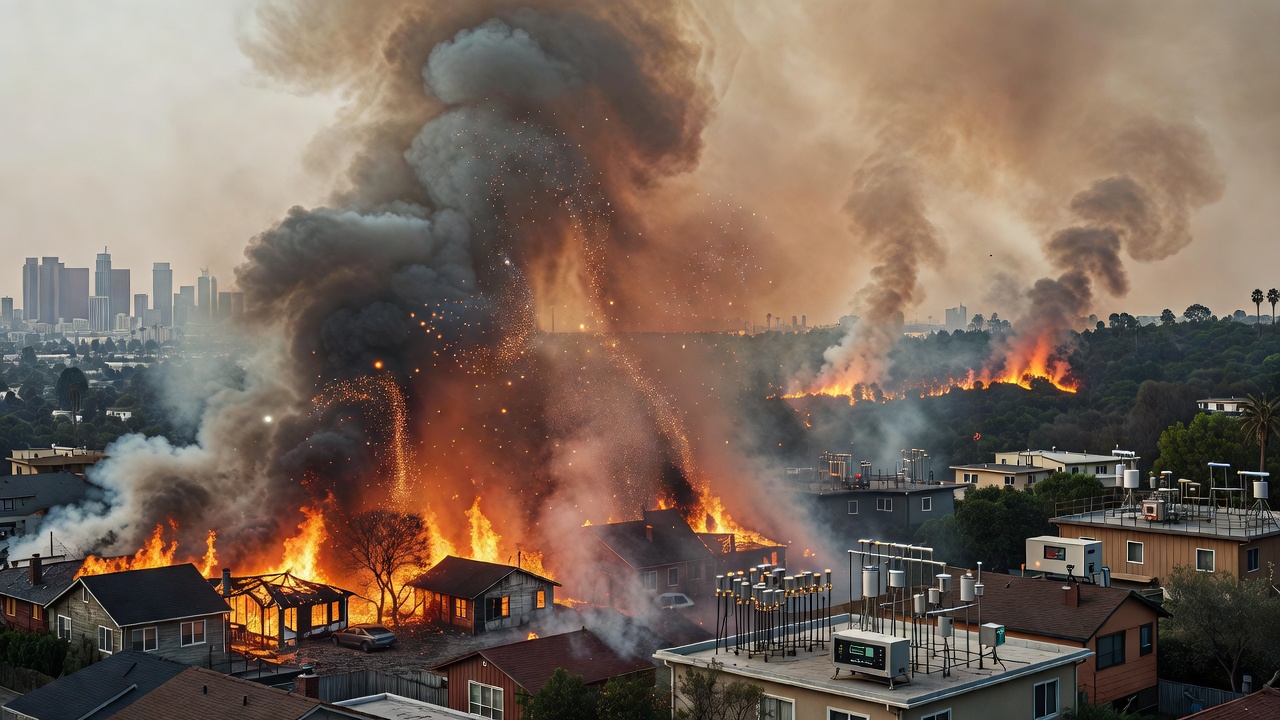
A new study in Science Advances compared pollution from the 2025 Eaton Fire, which killed 18 people and destroyed more than 9,000 structures in Altadena, California, with a 2024 vegetation-driven wildfire near Riverside. While both fires produced similar spikes in fine particulate matter, the Eaton Fire's smoke contained lead levels more than 50 times higher, along with elevated arsenic, chlorine and bromine.
Why urban fires burn differently
Unlike wildland fires that consume mostly brush and trees, the Eaton Fire tore through homes, vehicles, electronics and furnishings. Many of Altadena's older houses were built using lead paint and bromine-based flame retardants, materials that release toxic metals and chemicals when incinerated. Researchers also recorded arsenic levels roughly three times higher than those from the Riverside wildfire, and chlorine and bromine levels about seven times higher.
How researchers tracked the pollution
The study relied on real-time data from the Atmospheric Science and Chemistry Measurement Network (ASCENT), which continuously analyzes air samples. That capability contrasts with conventional monitoring systems, which often depend on laboratory analysis that can take weeks or months to produce results. Faster detection, the study's authors argue, could let officials flag hazardous airborne chemicals while a fire is still active rather than after the fact.
Scale of exposure and open health questions
During what researchers termed "peak structural burning," an estimated 7 million people in the Los Angeles area were exposed to 24-hour lead concentrations exceeding 50 nanograms per cubic meter - about 80 times typical background levels. Lead is a neurotoxin with particular risks for young children, and can contribute to high blood pressure and organ damage in adults; arsenic exposure has been linked to cardiovascular disease, diabetes and cancer risk. The study did not measure how much lead or arsenic individuals actually absorbed, nor did it assess resulting health outcomes, so the long-term consequences of short-term exposure at these concentrations remain unclear.
What this means going forward
As wildfires increasingly occur at the edges of urban development, researchers say monitoring networks capable of identifying specific toxic compounds in real time could help shape evacuation decisions and guide post-fire cleanup efforts. The findings add to broader concerns about contamination in fire-affected neighborhoods, where homes that appear structurally intact can still harbor residual toxins long after flames are extinguished.